
Longevity Synergy · The Botanicals
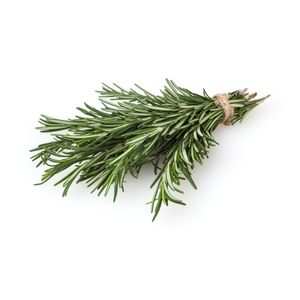
Rosemary
Rosemary and its signature compounds carnosic acid and rosmarinic acid help support the body's natural antioxidant defenses and healthy cognitive function.†
Why It's In The FormulaA culinary herb with a potent antioxidant chemistry
Rosemary (Rosmarinus officinalis) is a culinary and medicinal herb whose leaves are rich in two well-studied polyphenolic compounds: the diterpene carnosic acid and the phenolic ester rosmarinic acid. These constituents are best known as potent antioxidants that help support the body's own defenses against everyday oxidative stress.† Carnosic acid in particular is one of the more thoroughly characterized natural activators of Nrf2, the master regulatory switch that helps the body maintain its internal antioxidant systems.† Small human studies also suggest rosemary may help support healthy memory and cognitive performance, while preclinical research connects its compounds to several core cellular pathways associated with healthy aging.†
A note on the evidence: much of the pathway research below comes from laboratory (cell) and animal studies, which show how a compound is thought to work. We label the evidence level honestly for each area so you can weigh it yourself.
What The Science SupportsAntioxidant & cognitive support
Rosemary's carnosic acid and rosmarinic acid help support the body's natural antioxidant capacity and its healthy response to everyday oxidative stress.† Beyond antioxidant activity, two small randomized human studies have explored rosemary's effect on cognition: a short-term crossover study in older adults reported dose-dependent changes in cognitive performance measures, and a randomized clinical trial in university students found improvements in memory performance measures over four weeks. This early human evidence suggests rosemary may help support healthy memory and mental clarity, complementing a larger body of preclinical work on its antioxidant mechanisms.†
How It Connects To Your Longevity PathwaysRosemary & the master pathways
Longevity Synergy is built around cellular pathways central to healthy aging. Here is how Rosemary engages each one, with the research behind it.
Nrf2 Activation Preclinical, consistent
Nrf2 is a transcription factor that acts as the body's master switch for antioxidant and detoxification defenses, turning on protective genes when cells face oxidative stress. Carnosic acid is one of the most extensively studied plant activators of this pathway: it engages the Keap1-Nrf2 sensor, and rosemary extracts have been shown to raise Nrf2, sestrin-2, and related protective proteins in human cell models. By supporting healthy Nrf2 signaling, rosemary compounds help reinforce the body's built-in antioxidant defense systems.†
AMPK Activation Preclinical
AMPK is a cellular energy sensor that switches on when energy runs low, helping cells burn fuel efficiently and maintain healthy metabolism. In laboratory studies, both carnosic acid and rosmarinic acid increase AMPK activity, promote glucose uptake in skeletal muscle cells, and shift cellular metabolism toward a more efficient state. This preclinical work suggests rosemary compounds may help support healthy cellular energy metabolism through AMPK signaling.†
mTOR Modulation & Autophagy Preclinical
mTOR is a central growth-signaling hub; when its activity is dialed down, cells increase autophagy, the internal housekeeping process that clears out damaged proteins and worn-out components. In cell studies, carnosic acid and whole rosemary extract dampen Akt/mTOR signaling and induce autophagy, and carnosic acid can also engage the sestrin-2/LKB1/AMPK axis that feeds into this same cleanup machinery. These preclinical findings suggest rosemary compounds may help support the body's natural cellular renewal and housekeeping processes.†
Sirtuin Activation Preclinical
Sirtuins (especially SIRT1) are NAD+ dependent enzymes that help regulate cellular stress responses, mitochondrial health, and metabolic balance during aging. In animal models, carnosic acid activates the SIRT1/p66shc pathway, while rosmarinic acid engages the SIRT1/PGC-1 axis to support healthy mitochondrial function. This preclinical evidence suggests rosemary compounds may help support the sirtuin signaling and mitochondrial-quality pathways involved in healthy aging.†
At A GlanceEvidence summary
| Area | What it supports† | Evidence level |
|---|---|---|
| Antioxidant defense | The body's natural antioxidant capacity and healthy oxidative-stress response | Preclinical, consistent (Nrf2) |
| Cognitive function | Healthy memory and mental clarity | Early human |
| Cellular energy | Healthy cellular energy metabolism via AMPK | Preclinical |
| Cellular renewal | Natural cellular housekeeping (autophagy) and sirtuin pathways | Preclinical |
One Capsule · Eight Botanicals
Rosemary is one of eight, working in synergy
Each botanical in Longevity Synergy was chosen to support the master longevity pathways together.†
Explore Longevity SynergySourcesSelected research
- Short-Term Study on the Effects of Rosemary on Cognitive Function in an Elderly Population. Journal of Medicinal Food, 2012 (human RCT crossover) https://www.liebertpub.com/doi/10.1089/jmf.2011.0005
- Effects of Rosmarinus officinalis L. on memory performance, anxiety, depression, and sleep quality in university students: A randomized clinical trial. Complementary Therapies in Clinical Practice, 2018 (human RCT) https://www.sciencedirect.com/science/article/abs/pii/S1744388117304723
- Carnosic Acid and Carnosol, Two Major Antioxidants of Rosemary, Act through Different Mechanisms. PMC5664485, 2017 (cell / review) https://pmc.ncbi.nlm.nih.gov/articles/PMC5664485/
- Rosemary Extracts Upregulate Nrf2, Sestrin2, and MRP2 Protein Level in Human Hepatoma HepG2 Cells. Evidence-Based Complementary and Alternative Medicine, 2017 (cell) https://pmc.ncbi.nlm.nih.gov/articles/PMC5327778/
- Potential Therapeutic Use of the Rosemary Diterpene Carnosic Acid through NRF2 Activation. Antioxidants (MDPI), 2022 (review) https://www.mdpi.com/2076-3921/11/1/124
- Carnosic Acid and Carnosol Activate AMPK and Suppress Gluconeogenic and Lipogenic Genes in HepG2 Cells. International Journal of Molecular Sciences, 2021 (cell) https://www.ncbi.nlm.nih.gov/pmc/articles/PMC8070802/
- Rosmarinic Acid Increases Skeletal Muscle Cell Glucose Uptake and Activates AMPK. Molecules, 2017 (cell) https://pmc.ncbi.nlm.nih.gov/articles/PMC6151814/
- Carnosic acid induces autophagy through inhibition of the Akt/mTOR pathway in human hepatoma cells. Journal of Applied Toxicology, 2015 (cell) https://analyticalsciencejournals.onlinelibrary.wiley.com/doi/abs/10.1002/jat.3049
- Carnosic Acid: Induction of Autophagy and Activation of Sestrin-2/LKB1/AMPK Signalling. International Journal of Molecular Sciences, 2024 (cell) https://www.mdpi.com/1422-0067/25/4/1950
- Activation of the SIRT1/p66shc pathway via carnosic acid protects rats against fatty liver disease. PMC4650741, 2015 (animal) https://pmc.ncbi.nlm.nih.gov/articles/PMC4650741/
- Rosmarinic acid ameliorated cardiac dysfunction and mitochondrial injury via activation of the SIRT1/PGC-1 pathway. Biochem Biophys Res Commun, 2021 (animal) https://www.sciencedirect.com/science/article/abs/pii/S0006291X21001510
†These statements have not been evaluated by the Food and Drug Administration. This product is not intended to diagnose, treat, cure, or prevent any disease. Much of the pathway research described above is from laboratory and animal studies and indicates biological mechanisms rather than proven human outcomes.
← Back to The Science of Longevity Synergy