
Longevity Synergy · The Botanicals
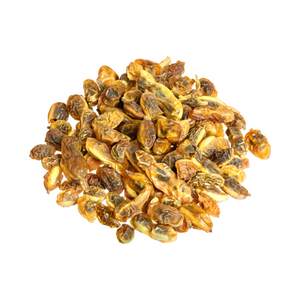
Luteolin
Luteolin is a plant flavonoid that helps support the body's antioxidant defenses and a healthy inflammatory response.†
Why It's In The FormulaA flavonoid studied for antioxidant and neuroprotective mechanisms
Luteolin is a flavonoid found in foods such as celery, parsley, chamomile, and peppers. It is studied for its role in supporting the body's natural antioxidant systems and helping maintain a healthy inflammatory response.† Laboratory and animal research also explores how luteolin interacts with cellular signaling pathways involved in metabolism and cellular housekeeping that tend to change with age.† Human research on luteolin is still limited, so much of the current understanding comes from cell and animal models, with early human studies now underway.
A note on the evidence: much of the pathway research below comes from laboratory (cell) and animal studies, which show how a compound is thought to work. We label the evidence level honestly for each area so you can weigh it yourself.
What The Science SupportsAntioxidant & healthy inflammatory response
Across many cell and animal studies, luteolin helps support the body's own antioxidant defenses and helps maintain a healthy inflammatory response, particularly in nervous-system tissue.† Reviews describe how luteolin may help support neuronal resilience by moderating the activity of immune cells in the brain and helping protect cells from oxidative stress.† These mechanisms are drawn largely from preclinical models and mechanistic reviews rather than large human trials.
How It Connects To Your Longevity PathwaysLuteolin & the master pathways
Longevity Synergy is built around cellular pathways central to healthy aging. Here is how Luteolin engages each one, with the research behind it.
Nrf2 Activation Preclinical, consistent
Nrf2 is a master regulator that switches on the body's own antioxidant and detoxification genes. In muscle cells and in the liver of mice, luteolin has been shown to activate Nrf2, helping support the cell's built-in antioxidant response.† This helps the body maintain balance against everyday oxidative stress.† The evidence to date is from cell and animal models.
AMPK Activation Preclinical, consistent
AMPK is a cellular energy sensor that becomes active when cells need to make or conserve energy, and it supports healthy metabolism. In multiple mouse studies, luteolin activated AMPK signaling, helping support energy metabolism, fat handling, and healthy insulin sensitivity.† These findings come from animal models and have not yet been confirmed in human trials.
mTOR Modulation & Autophagy Preclinical
Autophagy is the cell's recycling and cleanup process, which is partly controlled by the mTOR signaling hub and works alongside AMPK. In animal and cell studies, luteolin has been shown to influence the AMPK/mTOR axis in ways that help support autophagy and the clearing of damaged cell components.† Its effect on autophagy appears to depend on the tissue and context, and the data remain preclinical.
Sirtuin Activation Preclinical
Sirtuins, especially SIRT1, are enzymes tied to cellular stress resistance and healthy aging that often work in concert with AMPK. In animal and cell studies, luteolin has been associated with increased SIRT1 activity, which helps support antioxidant balance and cellular resilience.† This connection is supported by preclinical research only.
At A GlanceEvidence summary
| Area | What it supports† | Evidence level |
|---|---|---|
| Antioxidant & inflammatory response | Antioxidant defenses and a healthy inflammatory response | Preclinical, consistent |
| Nrf2 pathway | The cell's built-in antioxidant response | Preclinical, consistent |
| AMPK & metabolism | Healthy energy metabolism | Preclinical, consistent |
| mTOR / autophagy & sirtuins | Cellular cleanup and resilience | Preclinical |
One Capsule · Eight Botanicals
Luteolin is one of eight, working in synergy
Each botanical in Longevity Synergy was chosen to support the master longevity pathways together.†
Explore Longevity SynergySourcesSelected research
- Luteolin as an anti-inflammatory and neuroprotective agent: A brief review. Brain Research Bulletin, 2015 (review) https://pubmed.ncbi.nlm.nih.gov/26361743/
- Neuroprotective effects of the flavone luteolin in neuroinflammation and neurotrauma. BioFactors, 2021 (review, preclinical) https://pubmed.ncbi.nlm.nih.gov/33098588/
- Luteolin for neurodegenerative conditions: a review. Pharmacological Reports, 2024 (review) https://link.springer.com/article/10.1007/s43440-024-00610-8
- Luteolin Induces Nrf2 Activity in Muscle Cells: Implications for Muscle Health. International Journal of Molecular Sciences, 2025 (cell) https://pmc.ncbi.nlm.nih.gov/articles/PMC12071863/
- Low dose of luteolin activates Nrf2 in the liver of mice. PLOS ONE, 2020 (animal) https://journals.plos.org/plosone/article?id=10.1371/journal.pone.0231403
- Dietary luteolin activates browning and thermogenesis in mice through an AMPK/PGC1 pathway. International Journal of Obesity, 2016 (animal) https://www.nature.com/articles/ijo2016108
- Luteolin reduces obesity-associated insulin resistance in mice by activating AMPK in adipose tissue macrophages. Diabetologia, 2016 (animal) https://link.springer.com/article/10.1007/s00125-016-4039-8
- Luteolin activates the AMPK/mTOR autophagy pathway in kidney tissue. Journal of Inorganic Biochemistry, 2021 (animal) https://www.sciencedirect.com/science/article/abs/pii/S0162013421002300
- Autophagy regulation by luteolin: new insight into its activity. Cancer Cell International, 2020 (review, preclinical) https://pubmed.ncbi.nlm.nih.gov/33292250/
- Regulation of the Sirt1/Nrf2 signaling pathway by luteolin protects against liver injury. Scientific Reports, 2016 (animal) https://www.nature.com/articles/srep37157
- Luteolin decreases atherosclerosis via decreasing AMPK-SIRT1 signaling in macrophages. Journal of Nutritional Biochemistry, 2018 (animal) https://pmc.ncbi.nlm.nih.gov/articles/PMC6122446/
†These statements have not been evaluated by the Food and Drug Administration. This product is not intended to diagnose, treat, cure, or prevent any disease. Much of the pathway research described above is from laboratory and animal studies and indicates biological mechanisms rather than proven human outcomes.
← Back to The Science of Longevity Synergy