
Longevity Synergy · The Botanicals
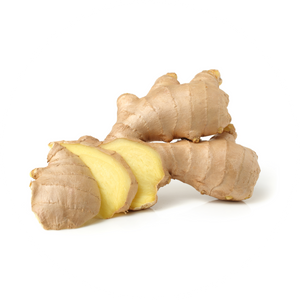
Ginger
Ginger and its key compounds, gingerols and 6-shogaol, help support healthy digestion and the body's own antioxidant defenses.†
Why It's In The FormulaA well-studied botanical for digestion and beyond
Ginger (Zingiber officinale) is one of the most extensively studied culinary botanicals, prized for the pungent compounds it delivers, chiefly 6-gingerol and its cousin 6-shogaol. In people, ginger is best recognized for helping support comfortable, healthy digestion and normal gastric motility.† Beyond the gut, laboratory research suggests its polyphenols engage several cellular pathways tied to healthy aging, helping support the body's own antioxidant and metabolic balance.† This makes ginger a well-rounded companion for maintaining everyday wellness as part of a longevity-minded routine.†
A note on the evidence: much of the pathway research below comes from laboratory (cell) and animal studies, which show how a compound is thought to work. We label the evidence level honestly for each area so you can weigh it yourself.
What The Science SupportsDigestive & antioxidant support
Ginger's strongest human evidence is digestive: across dozens of randomized trials it has been shown to help support healthy gastric motility and comfortable digestion.† A comprehensive systematic review of 109 randomized controlled trials catalogs these digestive and tolerability findings across diverse adult populations.† Separately, meta-analyses of human trials report that ginger supplementation helps support the body's antioxidant status by favorably influencing circulating oxidative-stress markers, complementing its role in helping maintain a healthy inflammatory response already within a normal range.†
How It Connects To Your Longevity PathwaysGinger & the master pathways
Longevity Synergy is built around cellular pathways central to healthy aging. Here is how Ginger engages each one, with the research behind it.
Nrf2 Activation Preclinical, consistent
Nrf2 is the master switch that turns on the body's built-in antioxidant and detoxification enzymes. In cell and animal studies, ginger's 6-shogaol (and its cysteine-conjugated metabolite) as well as 6-gingerol activate Nrf2 signaling, helping the body up-regulate its own antioxidant defense systems.† Multiple independent laboratory models point in the same direction, suggesting ginger polyphenols help support healthy Nrf2-driven resilience to oxidative stress.†
AMPK Activation Preclinical, consistent
AMPK is the cell's energy-sensing gauge that, when switched on, helps promote healthy metabolism and fat handling. In multiple animal and cell studies, 6-gingerol and ginger's phenolic compounds activate AMPK (via LKB1 and AdipoR1 signaling), helping support healthy lipid metabolism, mitochondrial function, and normal glucose utilization.† These consistent preclinical findings suggest ginger may help support metabolic balance already within a normal range.†
mTOR Modulation & Autophagy Preclinical
Autophagy is the cell's housekeeping process for clearing worn-out components, and it is held in check by the mTOR pathway. In cell studies, ginger's 6-shogaol has been shown to dial down AKT/mTOR signaling and thereby switch on autophagy, while 6-gingerol likewise promotes autophagic activity in vascular cells.† This early, laboratory-stage research suggests ginger compounds may help support the cell's natural renewal and cleanup machinery.†
Sirtuin Activation Preclinical
Sirtuins, especially SIRT1, are NAD-dependent longevity enzymes that help regulate healthy cellular stress responses and mitochondrial upkeep. In animal models, 6-gingerol has been reported to activate SIRT1 signaling, including engagement of the AMPK/SIRT1/PGC-1 axis that supports mitochondrial and metabolic health.† These preclinical findings suggest ginger may help support sirtuin-linked pathways involved in healthy aging.†
At A GlanceEvidence summary
| Area | What it supports† | Evidence level |
|---|---|---|
| Digestion | Healthy gastric motility and comfortable digestion | Moderate human |
| Antioxidant defense | The body's antioxidant status and Nrf2-driven resilience | Early human / preclinical |
| Metabolic balance | Healthy lipid and glucose metabolism via AMPK | Preclinical, consistent |
| Cellular renewal | Natural autophagy and sirtuin-linked pathways | Preclinical |
One Capsule · Eight Botanicals
Ginger is one of eight, working in synergy
Each botanical in Longevity Synergy was chosen to support the master longevity pathways together.†
Explore Longevity SynergySourcesSelected research
- Ginger on Human Health: A Comprehensive Systematic Review of 109 Randomized Controlled Trials. Nutrients, 2020 (review of human RCTs) https://www.mdpi.com/2072-6643/12/1/157
- Ginger in gastrointestinal disorders: A systematic review of clinical trials. Food Science & Nutrition, 2019 (review of human trials) https://onlinelibrary.wiley.com/doi/full/10.1002/fsn3.807
- Effects of ginger supplementation on biomarkers of oxidative stress: A systematic review and meta-analysis of RCTs. Clinical Nutrition ESPEN, 2021 (human meta-analysis) https://pubmed.ncbi.nlm.nih.gov/34620306/
- Ginger Compound 6-Shogaol and Its Cysteine-Conjugated Metabolite Activate Nrf2 in Colon Epithelial Cells in Vitro and in Vivo. Chemical Research in Toxicology, 2014 (cell + animal) https://pmc.ncbi.nlm.nih.gov/articles/PMC4176387/
- 6-Shogaol-Rich Extract from Ginger Up-Regulates the Antioxidant Defense Systems in Cells and Mice. Molecules, 2012 (cell + animal) https://www.mdpi.com/1420-3049/17/7/8037
- 6-Gingerol Ameliorates Hepatic Steatosis in High-Fat Diet-Fed Mice through Activating LKB1/AMPK Signaling. International Journal of Molecular Sciences, 2023 (animal) https://www.mdpi.com/1422-0067/24/7/6285
- A mixture of ginger phenolic compounds enhances mitochondrial function, activates AMPK, and reduces lipid accumulation in adipocytes. PLOS One, 2025 (cell) https://journals.plos.org/plosone/article?id=10.1371%2Fjournal.pone.0326690
- 6-Shogaol Induces Autophagy by Inhibiting the AKT/mTOR Pathway in Human Cells. Journal of Agricultural and Food Chemistry, 2009 (cell) https://pubs.acs.org/doi/10.1021/jf902315e
- 6-Gingerol induces autophagy to protect HUVECs survival from apoptosis. Chemico-Biological Interactions, 2016 (cell) https://www.sciencedirect.com/science/article/abs/pii/S0009279716302940
- 6-Gingerol, a functional polyphenol of ginger, reduces pulmonary fibrosis by activating Sirtuin1. Allergologia et Immunopathologia, 2022 (animal) https://all-imm.com/index.php/aei/article/view/533
- Protective Effects of 6-Gingerol Through the AMPK/SIRT1/PGC-1 Signaling Pathway. Cardiovascular Toxicology, 2022 (animal + cell) https://pmc.ncbi.nlm.nih.gov/articles/PMC9096219/
†These statements have not been evaluated by the Food and Drug Administration. This product is not intended to diagnose, treat, cure, or prevent any disease. Much of the pathway research described above is from laboratory and animal studies and indicates biological mechanisms rather than proven human outcomes.
← Back to The Science of Longevity Synergy